
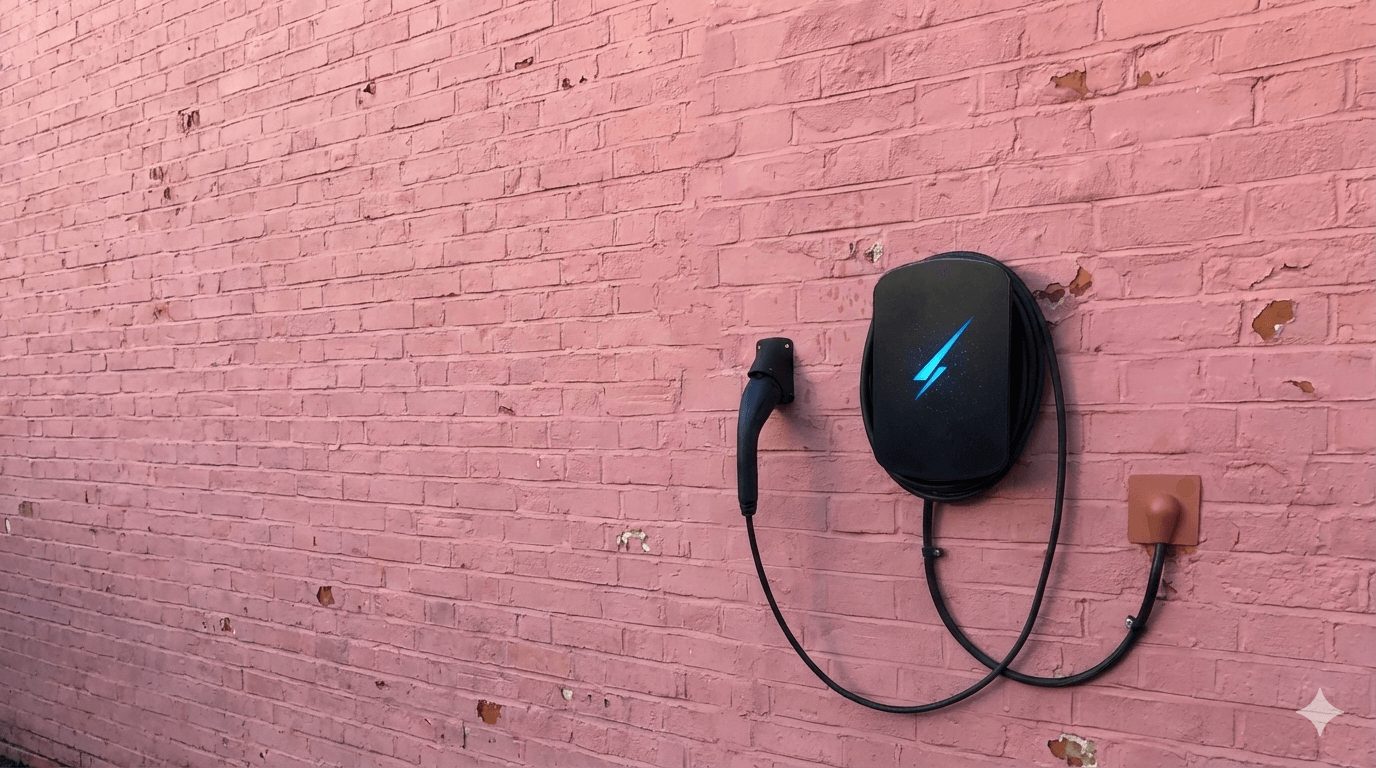
The Hypervolt Home 3.0 is one of the UK’s best-kept secrets in the home EV charging market. British-designed and manufactured, it offers a strong combination of smart features, solar compatibility, and dynamic load balancing that rivals the more widely advertised Zappi and Easee. If you’re researching home EV chargers and want a genuinely capable, home-grown option, this guide is for you. We install Hypervolt chargers across Watford and Hertfordshire and can give you an honest, experience-based assessment.
What Is the Hypervolt EV Charger?
Hypervolt is a British company whose chargers are designed and manufactured in the UK — a notable point of difference in a market dominated by Norwegian, German, and American brands. The Hypervolt Home 3.0 is their current domestic model, updated from the Home 2.0 with improved connectivity, dynamic load balancing, and solar integration.
It’s a 7.4kW smart charger with a clean, contemporary design. Its solar integration capabilities put it in the same category as Zappi for homeowners generating their own electricity, though the implementation differs. For homeowners who want a quality British product with solid smart features and don’t want to pay a premium for a brand name, Hypervolt deserves serious consideration.
Hypervolt Home 3.0 Key Features
- Dynamic Load Balancing: Monitors household electricity consumption via a CT clamp and adjusts charging speed to stay within your main fuse limit — same principle as Easee, and genuinely useful for older properties.
- Solar Integration: Compatible with solar PV systems via CT clamp monitoring. Can prioritise solar surplus for EV charging, reducing reliance on grid power during the day.
- Hypervolt App: Well-reviewed app for scheduling, monitoring, and control. Real-time charging data, session history, and energy cost tracking.
- Smart Tariff Scheduling: Set charging schedules to align with off-peak tariff windows for overnight cost savings.
- IP55 Rating: Weatherproof for outdoor installation.
- Tethered or Untethered: Available with a built-in Type 2 cable (6.5m) or as an untethered socket version.
- British-Made: Designed and manufactured in the UK — a genuine selling point for those who prefer to support domestic industry.
- 5-Year Warranty: Longer standard warranty than most competitors.
Who Is Hypervolt Best For?
Hypervolt sits in a slightly different market position from Zappi, Easee, and Ohme. It’s a well-rounded option that suits:
- Solar panel owners who want a UK alternative to Zappi: Hypervolt’s solar integration is genuine and functional, though Zappi’s eco-mode system is more sophisticated. For homeowners who want solar-aware charging without committing to the myenergi ecosystem, Hypervolt is a strong choice.
- Homeowners with limited electrical capacity: The dynamic load balancing makes it suitable for older properties where the electrical supply headroom is tight.
- Those who prefer British-made products: If supporting UK manufacturing matters to you, Hypervolt is the standout domestic option.
- Buyers wanting a longer warranty: The 5-year standard warranty gives additional peace of mind over the typical 3-year cover offered by most competitors.
- Budget-conscious buyers who want quality smart features: Hypervolt’s unit price is competitive, making it a good option when you want capable charging without overpaying for brand recognition.
Hypervolt is less well-suited to multi-EV households where Easee’s multi-charger load equalisation has the edge, or to users specifically seeking the deep Intelligent Octopus integration that Ohme offers.
Hypervolt Home 3.0 Technical Specifications
- Power output: 7.4kW (single phase, 32A)
- Connector: Type 2 tethered (6.5m) or untethered socket — buyer’s choice
- Supply voltage: 230V single phase
- Dimensions: Compact profile — similar in size to Easee One
- IP Rating: IP55 — suitable for outdoor installation
- Connectivity: Wi-Fi
- Smart features: Dynamic load balancing, solar integration, scheduled charging, OCPP compatible
- Warranty: 5 years
Hypervolt vs Zappi: Solar Integration Compared
This is the most common comparison we’re asked about, so it’s worth addressing in detail. Both chargers support solar integration, but they approach it differently.
Zappi uses dedicated eco-modes (eco and eco+) where the charger actively monitors generation and consumption in real time via CT clamp, then diverts surplus solar power to the car. The eco+ mode charges exclusively from surplus — it waits until there’s enough free solar power before starting a session. This is a very pure, elegant implementation.
Hypervolt’s solar integration also uses CT clamp monitoring and can reduce or increase charging speed based on solar surplus. It’s functional and effective, but the control logic isn’t quite as refined as Zappi’s dedicated eco-mode system. For homeowners with larger solar arrays (4kW+) who want to maximise free solar charging, Zappi remains our top recommendation.
That said, for homeowners with smaller systems (3kW or less) who want solar-aware charging alongside load balancing and a British-made product, Hypervolt performs well and at a competitive price.
Hypervolt Installation: What to Expect
Site Assessment
The Hypervolt installation process is the same as any smart charger with load balancing. We assess your consumer unit, plan the cable route, check earthing arrangements, and determine the best position for the CT clamp. The CT clamp is clipped onto the main supply cable at your consumer unit — the same process as for Easee and Zappi installations.
We’ll also confirm Wi-Fi signal strength at the charger location, as Hypervolt requires a reliable connection for app control and scheduling.
Installation Day
A standard Hypervolt installation typically takes two to three hours. We run the dedicated circuit, install the protection at the consumer unit, mount the charger, fit the CT clamp, and commission the unit. App setup takes around ten minutes. We’ll run through the solar integration and scheduling settings with you before we leave.
How Much Does a Hypervolt Home 3.0 Cost to Install?
A Hypervolt Home 3.0 installation in Hertfordshire typically costs between £900 and £1,350 all in. The charger unit itself is competitively priced, which often makes Hypervolt one of the more cost-effective options among quality smart chargers with solar integration.
The usual variables apply: cable run length, consumer unit condition, earthing requirements. We provide itemised, fixed-price quotes. For a detailed breakdown of what drives EV charger installation costs in our area, see our Hertfordshire cost guide.
Hypervolt and EV Charger Grants
Hypervolt Home 3.0 qualifies for the government EV chargepoint grant. It meets the smart charger criteria and is on the approved products list. As with all our installations, we handle the grant application on your behalf as part of the process.
How Hypervolt Compares to the Competition
- Hypervolt vs Zappi: Zappi is the better choice for solar panel owners who want maximum solar diversion sophistication. Hypervolt is the better choice if you want load balancing plus solar integration in a British-made product at a competitive price.
- Hypervolt vs Easee: Easee is stronger for multi-EV household load management. Hypervolt has better solar integration and a longer warranty.
- Hypervolt vs Ohme: Ohme wins on smart tariff integration, particularly with Intelligent Octopus. Hypervolt wins on solar integration and load balancing capability.
For a full three-way comparison of the most popular options, see our Easee vs Zappi vs Ohme guide — we’ll be adding a Hypervolt section shortly.
Real Installation: Hypervolt in Hertfordshire
We installed a Hypervolt Home 3.0 (untethered version) for a homeowner in Harpenden who had a 3.5kW solar PV system and two plug-in vehicles — a full EV and a plug-in hybrid. They wanted a charger that could use their solar generation sensibly while keeping load below their 80A main fuse on evenings when both vehicles were plugged in. Hypervolt’s combination of solar monitoring and dynamic load balancing made it the right fit. The installation took three hours including CT clamp positioning and app setup. They’ve been managing both vehicles from a single charger — the solar surplus goes to the car drawing the most power, and load balancing prevents any risk of tripping the main fuse.
Frequently Asked Questions About Hypervolt
Is Hypervolt really made in the UK?
Yes. Hypervolt is a British company and its chargers are designed and manufactured in the UK. For homeowners who want to support domestic manufacturing and prefer not to rely on overseas supply chains, this is a genuine advantage.
How does Hypervolt’s 5-year warranty compare?
Most home EV chargers come with a 3-year warranty as standard. Hypervolt’s 5-year cover is one of the longest in the domestic market and reflects confidence in the product’s build quality. It also reduces the risk of replacement costs during the early years of ownership.
Does Hypervolt support three-phase charging?
The Hypervolt Home 3.0 is a single-phase charger rated at 7.4kW. Three-phase domestic installations (22kW) are relatively rare in UK homes, and for the vast majority of Hertfordshire homeowners, 7.4kW is more than sufficient — it adds around 30 miles of range per hour for most EVs.
Can I use Hypervolt with a smart energy tariff?
Yes. Hypervolt supports scheduled charging through the app, which you can align with off-peak tariff windows such as Octopus Go or Economy 7. The tariff API integration is not as deep as Ohme’s Intelligent Octopus connection, but scheduled charging at off-peak hours is straightforward to set up.
Ready to Install a Hypervolt Charger in Watford or Hertfordshire?
We install Hypervolt Home 3.0 chargers across Watford, St Albans, Hemel Hempstead, Bushey, Rickmansworth, and throughout Hertfordshire. As a family-run NAPIT-registered team, we’ll help you weigh up Hypervolt against the alternatives and give you an honest recommendation based on your home, your car, and your energy setup.
Call 07736 736233 or fill in our online quote form for a free, no-obligation quote. We handle everything from site assessment to grant application and Part P certification.