
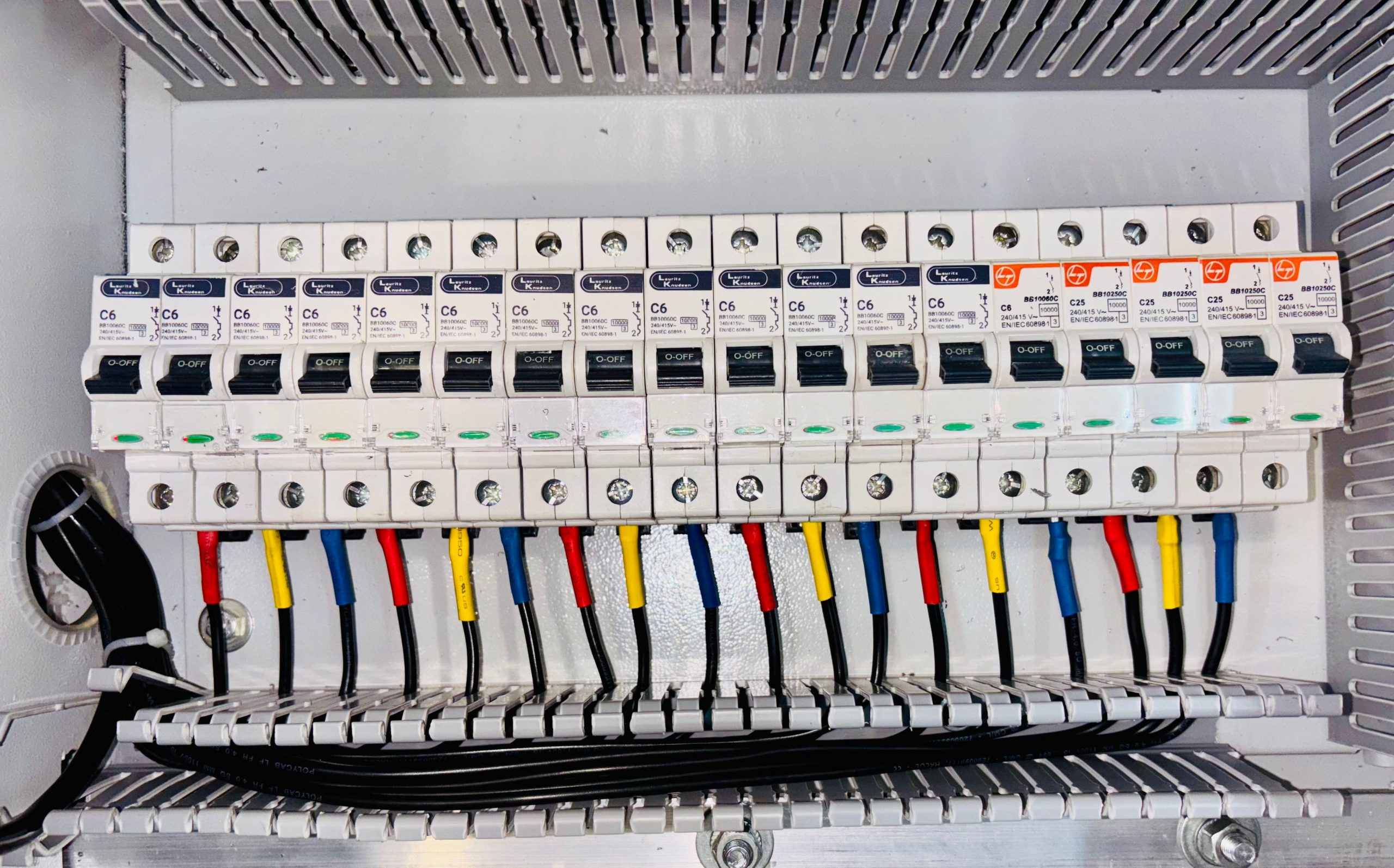
Your consumer unit, the fuse board that distributes electricity around your home and protects each circuit, isn’t something most homeowners think about until something goes wrong. But an ageing or non-compliant consumer unit is one of the most common issues we find on site visits across Hertfordshire, particularly in properties that haven’t been touched since the 1980s or 90s. Here’s what to actually look for.
1. It’s still a plastic consumer unit
Since 2016, UK wiring regulations (Amendment 3 to BS 7671) have required metal-clad consumer units in domestic properties, specifically because plastic units can contribute to fire spread if a fault occurs inside them. If yours is plastic, it isn’t automatically dangerous, but it no longer meets current regulations and most insurers and mortgage surveyors will flag it. This is one of the most common reasons homeowners come to us after a house survey.
2. It uses rewireable fuses instead of circuit breakers
If your fuse box has fuse wire you’d physically replace after it blows, rather than a switch you flip back on, it predates modern circuit breaker technology entirely. These units are typically decades old and almost never have RCD protection, which is the single biggest safety upgrade in domestic electrics of the last 30 years.
3. No RCD protection, or only partial protection
An RCD (residual current device) cuts power almost instantly if it detects current leaking to earth, the kind of fault that causes electric shocks. Modern consumer units have RCD or RCBO protection on every circuit; older ones often have none, or only cover some circuits via a single shared RCD, meaning one fault trips everything, or worse, doesn’t trip at all. If you’re not sure which category yours falls into, we can check this as part of a free site visit.
4. Frequent tripping, or breakers that won’t reset
Occasional tripping usually points to a specific appliance fault, worth investigating on its own. But frequent, unexplained tripping, or breakers that trip again immediately after resetting, often indicates the consumer unit itself is struggling, whether from age, moisture ingress, or a unit that was never quite adequate for the property’s actual load.
5. No spare ways for additional circuits
If you’re planning an EV charger, a home office circuit, or additional sockets, and your consumer unit has no spare capacity, an upgrade becomes a practical necessity rather than just a safety recommendation. This is one of the most common triggers for an upgrade we see, homeowners planning one piece of work discover the consumer unit needs addressing first.
6. Your last EICR flagged it
If a recent Electrical Installation Condition Report flagged your consumer unit as a C1, C2, or even C3 observation, that’s a professional assessment worth acting on, particularly for C1 (danger present) or C2 (potentially dangerous) findings. We don’t carry out EICR inspections ourselves, but we regularly action the consumer unit work that follows one.
What a consumer unit upgrade actually involves
A standard upgrade typically takes half a day to a full day, depending on the number of circuits, and involves fitting a new metal-clad unit with RCBO protection on every circuit (rather than a shared RCD), testing and labelling each circuit, and issuing a Minor Works or Electrical Installation Certificate as appropriate. You’ll be without power for most of the working day while it’s carried out, so we’ll agree timing with you in advance.
How much does it cost?
A standalone consumer unit upgrade typically costs between £450 and £800 in Hertfordshire, depending on the number of circuits and any additional work needed, such as an earth electrode for older supplies. If you’re already planning other electrical work, combining it into a single visit is usually better value than doing it separately.
Frequently Asked Questions
-
Is a plastic consumer unit actually dangerous?
Not automatically, but it no longer meets current wiring regulations, which specifically require metal-clad units to reduce fire spread risk. Most insurers and mortgage surveyors will flag it, and many homeowners choose to upgrade proactively rather than wait for an issue.
-
How long does a consumer unit upgrade take?
Typically half a day to a full day for a standard domestic property, depending on the number of circuits. You’ll be without power for most of that time, so we agree a suitable day with you in advance.
-
Do I need an upgrade before installing an EV charger?
Sometimes, depending on your existing consumer unit’s capacity and condition. We assess this properly during a free site survey rather than assuming either way, and some chargers with strong load balancing can avoid the need for an upgrade on certain supplies.
-
Can I get a certificate for the work?
Yes. Every consumer unit upgrade we carry out is tested and certified, with a Minor Works or Electrical Installation Certificate as appropriate, and notified under Part P Building Regulations.
Ready to Get Your Free Consumer Unit Quote?
Call us on 07736 736233 or fill in our contact form for a free, no-obligation assessment. We cover Watford, St Albans, Hemel Hempstead, Bushey, Rickmansworth, and throughout Hertfordshire, and will give you an honest view on whether an upgrade is genuinely needed.