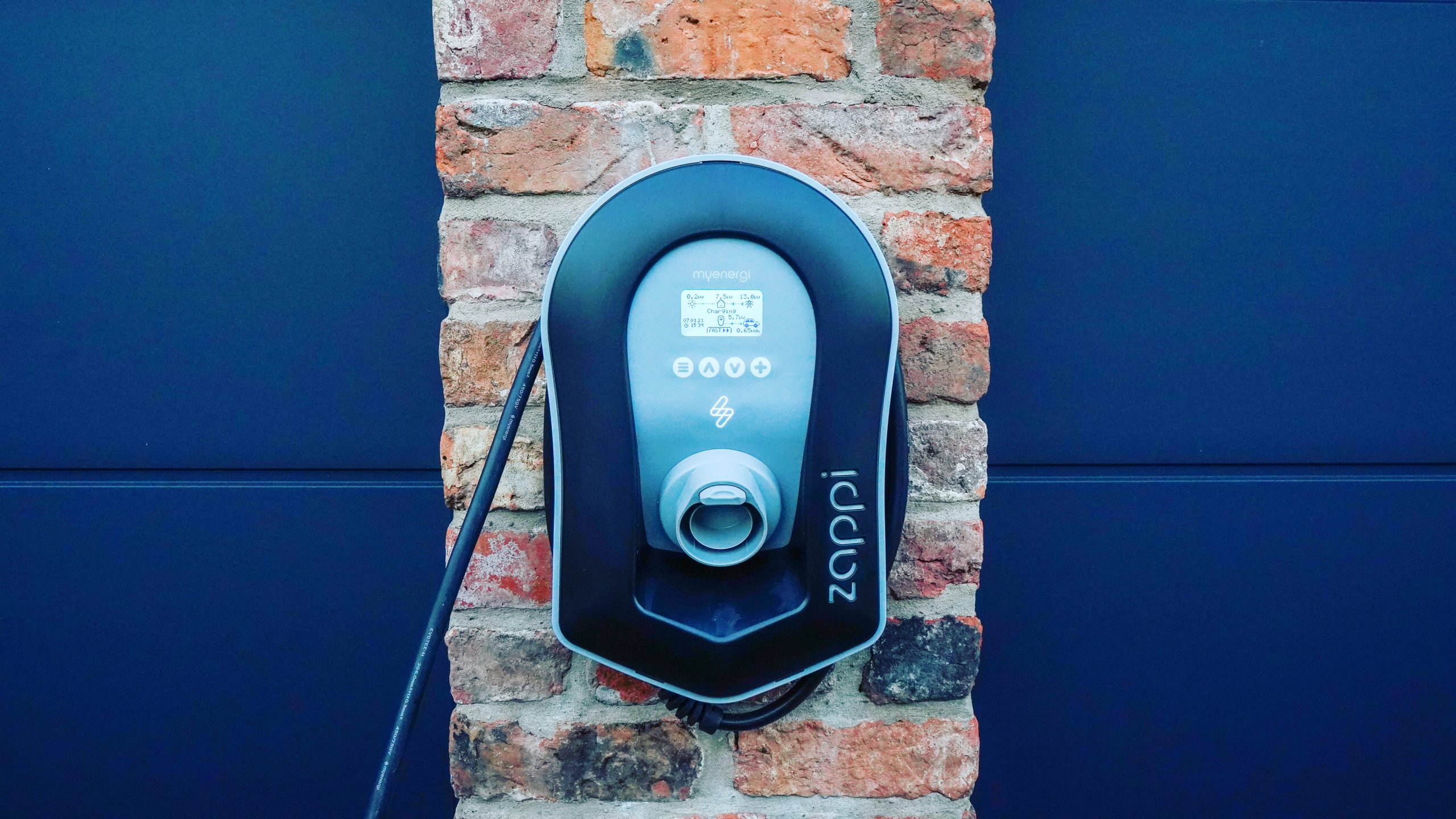
If you own or are planning to buy an electric car, the Zappi by myenergi is one of the most talked-about home chargers on the market — and for good reason. It’s the go-to choice for homeowners with solar panels, and its smart eco-charging features set it apart from most competitors. In this guide, we’ll walk you through everything you need to know about the Zappi: what it does, who it suits, how much it costs, and what to expect from installation. We install Zappi chargers across Watford, St Albans, and Hertfordshire, so this advice comes from real on-the-ground experience.
What Is the Zappi EV Charger?
The Zappi is a smart home EV charger made by myenergi, a British company based in Lincolnshire. It launched in 2018 and has built a strong reputation in the UK market, particularly among eco-conscious homeowners and those with rooftop solar panels.
What sets Zappi apart is its ability to intelligently manage how and when your car charges, using solar or wind energy whenever it’s available rather than drawing from the grid. It’s one of the few chargers that actively diverts surplus renewable energy into your EV battery — a feature that can dramatically reduce your charging costs if you generate your own electricity.
Zappi Key Features
- Eco+ Mode: Charges exclusively using surplus solar or wind energy — free electricity when the sun or wind is strong enough
- Eco Mode: Supplements surplus renewable energy with grid power to maintain a minimum charging rate
- Fast Mode: Charges at full power from the grid regardless of solar generation — same as any standard charger
- Solar Diversion: Automatically detects surplus generation via a CT clamp and diverts it to your EV in real time
- myenergi App: Monitor charging sessions, track costs, schedule charging, and manage multiple myenergi devices
- Integration with myenergi Hub: Works alongside Eddi (solar water heater) and Libbi (home battery) for a full home energy management system
- Smart Tariff Charging: Can be scheduled to charge during off-peak hours (e.g., Octopus Go, Economy 7)
- IP65 Rating: Fully weatherproof for external installation
- Tethered or Untethered: Available with a built-in cable (Type 1 or Type 2) or without
Who Is Zappi Best For?
Zappi is an excellent choice for a wide range of homeowners, but it really shines in specific situations:
- Solar panel owners: This is where Zappi is unmatched. If you generate your own electricity, Zappi’s eco-modes mean you can charge your car primarily for free during daylight hours.
- Eco-conscious homeowners: Even without solar panels, you can schedule charging to use grid electricity at its greenest (and cheapest) times overnight.
- myenergi ecosystem users: If you already have or are considering an Eddi hot water diverter or Libbi battery, Zappi integrates seamlessly for whole-home energy management.
- Tech-savvy users: The app is detailed and genuinely useful — if you like monitoring and optimising your energy use, Zappi gives you the data to do it.
- Those planning solar in future: Buying a solar-ready charger now means you won’t need to upgrade when you add panels.
Zappi may be overkill if you have no solar panels, no plans to add them, and simply want the cheapest smart charger that qualifies for grants. In that case, an Ohme or Easee might offer better value.
Zappi Technical Specifications
- Models: Zappi v2.1 (current model)
- Power output: 7.4kW single phase (32A) — standard for UK domestic installations
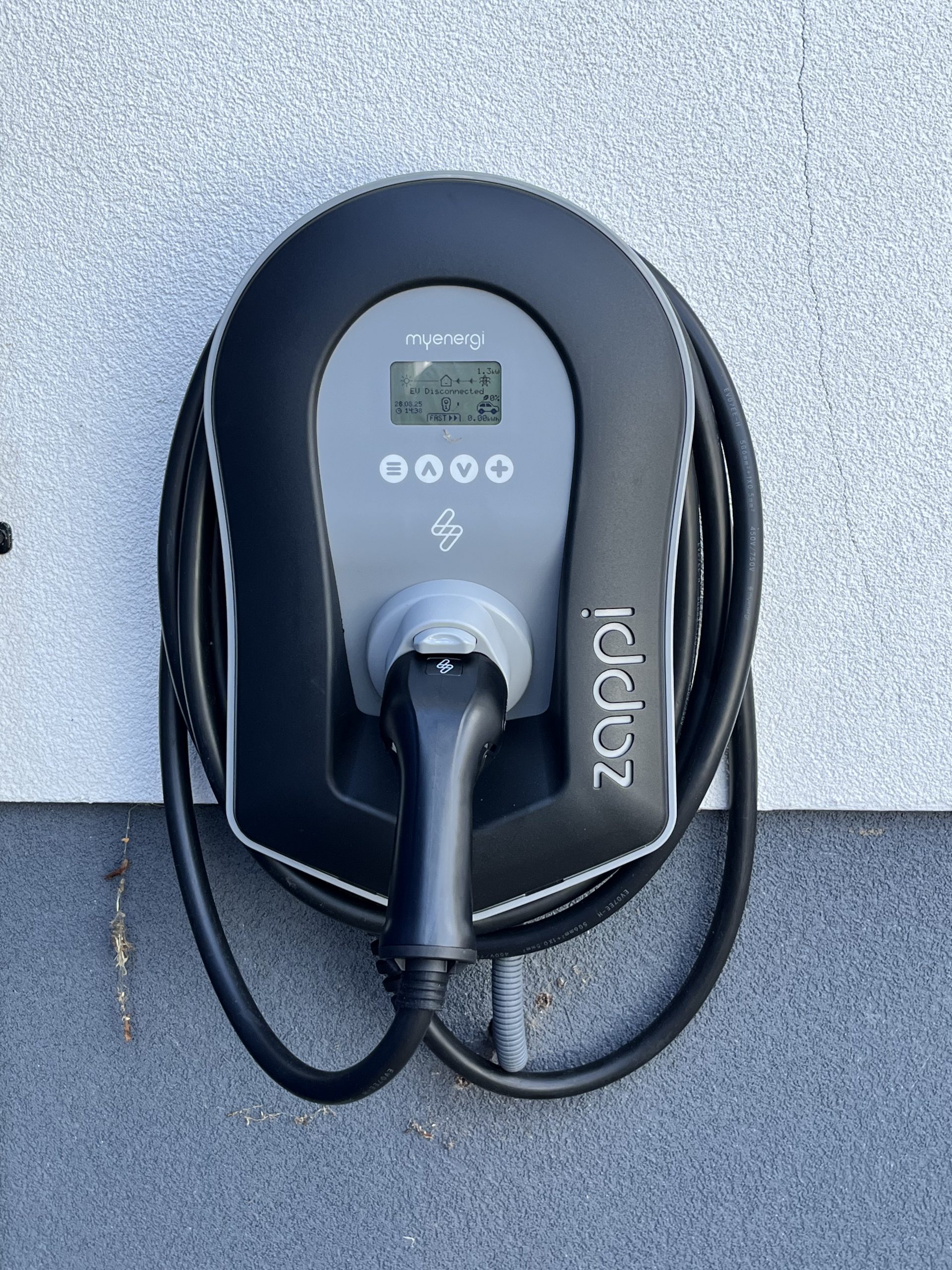
- Connector: Tethered Type 2 (5m or 8m cable) or untethered (Type 2 socket)
- Supply voltage: 240V single phase
- Dimensions: 330mm x 220mm x 140mm (compact enough for most garages and driveways)
- IP Rating: IP65 — suitable for outdoor installation
- Connectivity: Wi-Fi and Ethernet
- Display: LED ring showing charge status and solar generation
- CT clamp included: Required for solar diversion — monitors generation at the consumer unit
Zappi Installation: What to Expect
Installing a Zappi follows the same process as any home EV charger, with one additional consideration: the CT clamp. This small sensor clips onto the main supply cable at your consumer unit to monitor your household’s electricity import and export. It’s what enables the solar diversion feature to work.
What We Assess Before Installation
- Consumer unit capacity: Your charger needs a dedicated 32A circuit with appropriate RCD protection. We check whether your existing consumer unit has a spare way and sufficient capacity.
- Cable route: We plan the most practical route from your consumer unit to the charger position, whether that’s through a garage, under a driveway, or along an external wall.
- Earthing arrangements: Properties with a PME (Protective Multiple Earthing) supply — which includes most UK homes — require careful earthing assessment for EV chargers. In some cases, an earth electrode is needed.
- CT clamp positioning: We identify the best location to install the CT clamp at the consumer unit for accurate solar monitoring.
- Wi-Fi signal: Zappi needs a reliable Wi-Fi connection for app control and scheduling. We check signal strength at the charger location.
Installation Day
A standard Zappi installation typically takes between two and four hours for our team. We run the dedicated cable, install the circuit protection at the consumer unit, mount and connect the charger, install the CT clamp, and then test and commission everything. You’ll also get a demonstration of the app and eco-modes so you can start using all the features from day one.
Once complete, we issue the relevant electrical installation certificate and handle Part P Building Regulations compliance on your behalf.
How Much Does a Zappi Cost to Install?
As a guide, a typical Zappi installation in Hertfordshire comes in between £1,100 and £1,600 all in, including the charger unit, installation labour, materials, and certification. That range exists because several factors affect the final cost:
- Distance from consumer unit to parking space: Longer cable runs require more materials and time.
- Consumer unit condition: If your consumer unit needs upgrading before we can add the dedicated EV circuit, this adds to the cost — though it improves your whole home’s electrical safety.
- Earthing requirements: Properties needing an additional earth electrode add a small amount to the installation cost.
- Charger type: Tethered vs untethered options have slightly different unit prices.
For a detailed breakdown of what affects EV charger installation costs in Hertfordshire, see our full cost guide. We always provide fixed-price, itemised quotes — no surprises on the day.
Get a Zappi Installed in Watford or Hertfordshire
Call us on 07736 736233 or request a free quote online. As NAPIT-registered domestic electricians, we install Zappi EV chargers across Watford and Hertfordshire with full certification, grant application support, and no hidden costs.
Zappi and EV Charger Grants
Zappi qualifies for the current government EV chargepoint grant scheme because it’s a smart charger with scheduling and off-peak charging capability. The grant currently provides a contribution toward the cost of supply and installation for eligible homeowners and renters. We handle the grant application process for you — just let us know when you get in touch.
Check current grant availability at the time of your installation, as government schemes do change. We’ll always advise on the latest eligible funding when you request a quote.
Zappi vs Other Chargers: A Quick Comparison
Zappi is our most popular recommendation for solar panel owners, but it’s worth knowing how it compares to the alternatives:
- Zappi vs Easee: Easee is excellent for households with multiple EVs or limited electrical capacity, thanks to its dynamic load balancing. For pure solar integration, Zappi wins.
- Zappi vs Ohme: Ohme is the smartest charger for off-peak tariff optimisation and integrates brilliantly with Intelligent Octopus. For solar diversion, Zappi is far superior.
- Zappi vs Hypervolt: Hypervolt offers good solar compatibility and is British-made, making it a solid alternative. Zappi’s eco-mode system and myenergi ecosystem integration is more mature.
For a full side-by-side comparison, see our Easee vs Zappi vs Ohme guide.
Frequently Asked Questions About Zappi
Does Zappi work without solar panels?
Yes, absolutely. Without solar panels, Zappi works as a standard smart charger — you can still schedule charging for off-peak tariff hours and monitor your usage via the app. You simply won’t use the eco-modes until you have a renewable source to divert from.
Can I add a Zappi to my existing myenergi setup?
Yes. If you already have an Eddi solar water heater or are planning a Libbi home battery, Zappi integrates with both through the myenergi hub. The system intelligently prioritises where surplus solar energy goes — battery, car, or hot water — based on your preferences.
Is Zappi eligible for the EV chargepoint grant?
Yes. Zappi qualifies as a smart charger under the grant criteria because it supports off-peak scheduling and demand-side response. We’ll handle the application on your behalf.
Does Zappi need to be online to charge?
No. If your Wi-Fi connection drops, Zappi continues to charge in fast mode. The smart features (app control, scheduling, solar diversion) require connectivity, but the core charging function works independently.
Ready to Get Your Free EV Charger Installation Quote?
Call us on 07736 736233 or fill in our EV charger quote form for a free, no-obligation assessment. We cover Watford, St Albans, Hemel Hempstead, Bushey, Rickmansworth, and throughout Hertfordshire. We will advise honestly on the right charger for your home, handle the grant application if you are eligible, and take care of everything from installation through to final certification.