
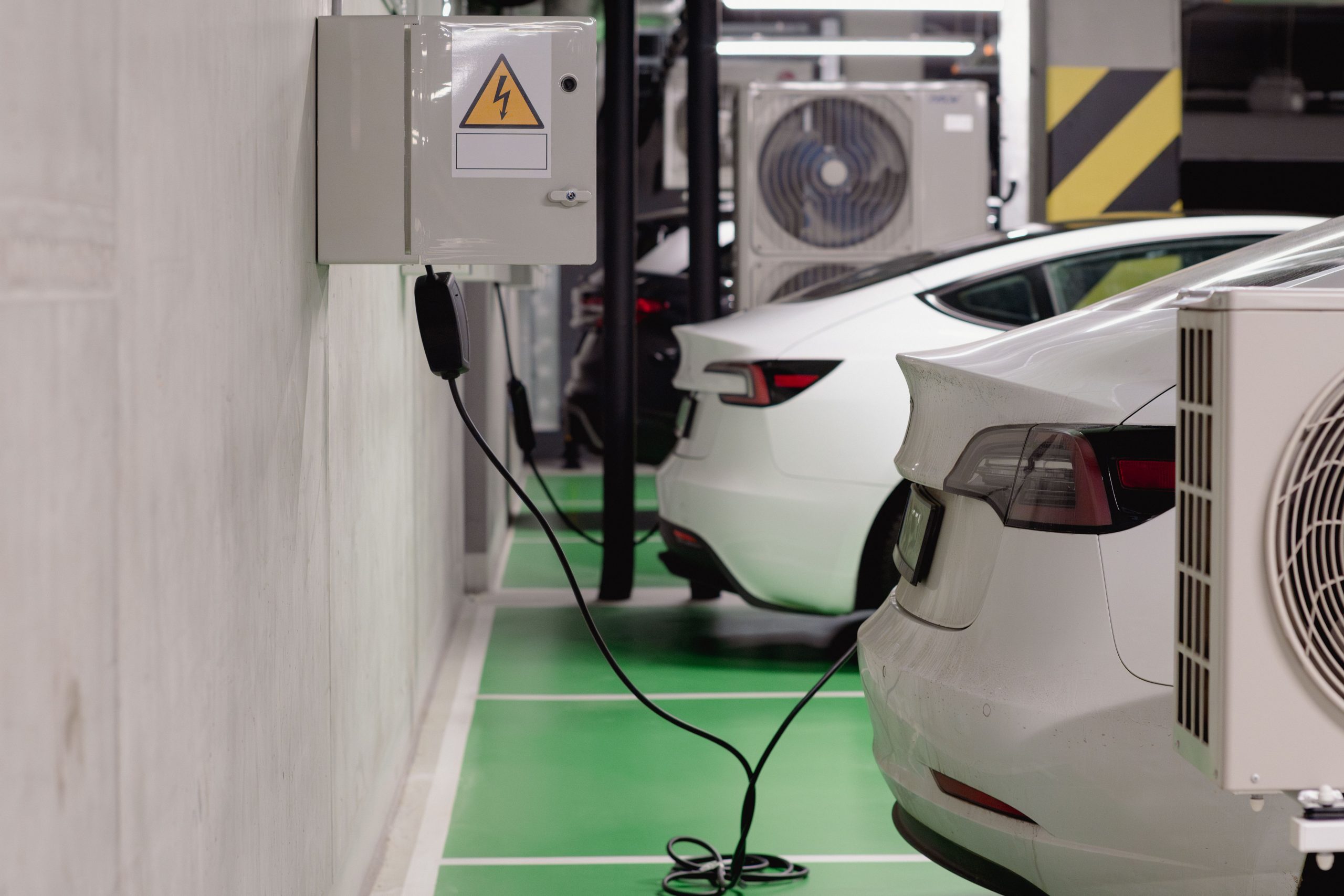
If your home has two electric cars, or an older electrical supply with less headroom than a modern property, load balancing is one of the most useful features an EV charger can offer. Here is what it actually does and when it genuinely matters.
What is load balancing?
Load balancing is a charger’s ability to monitor your household’s total electricity use in real time, and automatically adjust how much power it sends to your EV, so the combined load never exceeds your main fuse’s safe capacity. Instead of charging at a fixed rate regardless of what else is running in your home, the charger dials power up or down dynamically.
Why it matters
- Prevents tripping your main fuse: running the oven, shower, and kettle simultaneously while your car charges at full power could overload an older supply. Load balancing avoids this automatically.
- Can avoid the need for a consumer unit upgrade: in some cases, a charger with good load balancing lets you install a full-speed charger without upgrading your electrical supply first, since it manages demand rather than requiring extra headroom.
- Enables multiple EVs without doubling your capacity: two chargers with load balancing can share the available supply between them, rather than each needing dedicated full capacity.
How it actually works
A CT clamp fitted at your consumer unit monitors your total household electricity consumption continuously. The charger reads this data and adjusts its own charging power to keep the combined load within your main fuse’s safe limit. During low-demand periods, overnight, for instance, the car charges at full speed. If demand spikes elsewhere in the house, charging power reduces temporarily to compensate, then increases again once demand drops.
Static vs dynamic load balancing
Static load balancing allocates a fixed maximum to the charger, calculated to leave enough headroom for typical household use, but does not adjust in real time.
Dynamic load balancing, the more sophisticated and increasingly standard approach, continuously monitors and adjusts, giving the charger more power when the rest of the house is quiet and less when demand is high.
Which chargers have load balancing?
- Easee One: excellent dynamic load balancing, and its standout feature. Multiple Easee units can be connected together and will automatically share available capacity between them, ideal for two-EV households.
- Zappi: good dynamic load management as part of its broader smart feature set, though its primary strength is solar diversion rather than load balancing specifically.
- Hypervolt Home 3.0: solid dynamic load balancing alongside its solar integration features.
- Ohme Home Pro: more limited here, its focus is scheduled charging and tariff optimisation rather than real-time load balancing.
When load balancing is essential
- Limited electrical supply: properties with a 60A main fuse and a heavy existing load benefit significantly.
- Multiple EVs: two cars charging simultaneously without load balancing risks exceeding supply capacity.
- Older consumer units without spare capacity: load balancing can sometimes avoid the need for an upgrade before installing a dedicated 32A EV circuit, worth discussing at survey stage. See our guide on whether you need a consumer unit upgrade for an EV charger for more detail.
A real installation example
We installed two Easee One chargers for a family in Hemel Hempstead, a husband and wife who both drive electric cars. Their property had a 100A main fuse, and with both cars charging simultaneously, they were approaching the supply limit. We fitted a CT clamp to monitor the main supply and configured the chargers in load-sharing mode. The system now automatically distributes available power between both cars overnight, with neither charger exceeding the safe supply limit, and no manual intervention needed from the household.
Frequently Asked Questions
-
Does load balancing slow down my charging?
Only when household demand genuinely requires it, and only temporarily. Most of the time, particularly overnight, your car charges at full speed.
-
Can I add a second EV charger later with load balancing?
Yes, this is one of Easee’s real strengths. Install one unit now, and a second can be added later, the two will automatically pair and share available capacity without needing separate infrastructure work.
-
Will load balancing let me avoid a consumer unit upgrade?
Sometimes, depending on your existing supply and consumer unit condition. We assess this properly during your site survey rather than assuming either way.
-
Which charger has the best load balancing?
Easee One, for both single and multi-charger households. It is the standout feature of that particular unit.
Ready to Get Your Free EV Charger Installation Quote?
Call us on 07736 736233 or fill in our EV charger quote form for a free, no-obligation assessment. We cover Watford, St Albans, Hemel Hempstead, Bushey, Rickmansworth, and throughout Hertfordshire. We will advise honestly on the right charger for your home, handle the grant application if you are eligible, and take care of everything from installation through to final certification.