
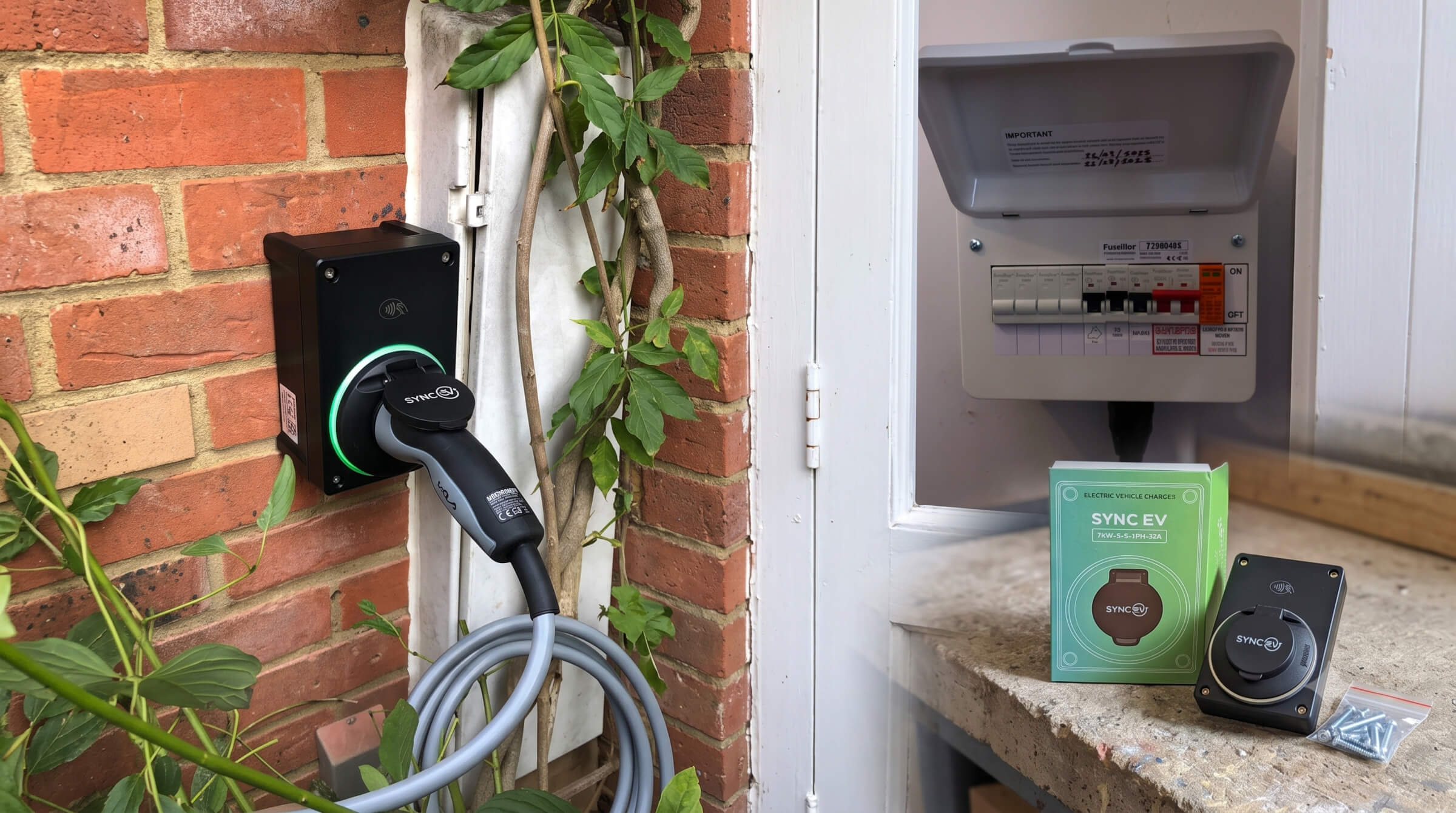
One of the questions we’re asked most often during an EV charger quote is whether to go tethered or untethered. It’s a simple-sounding choice with a genuine impact on day-to-day convenience, so it’s worth understanding both properly before you decide, rather than defaulting to whichever your installer happens to stock.
What’s the actual difference?
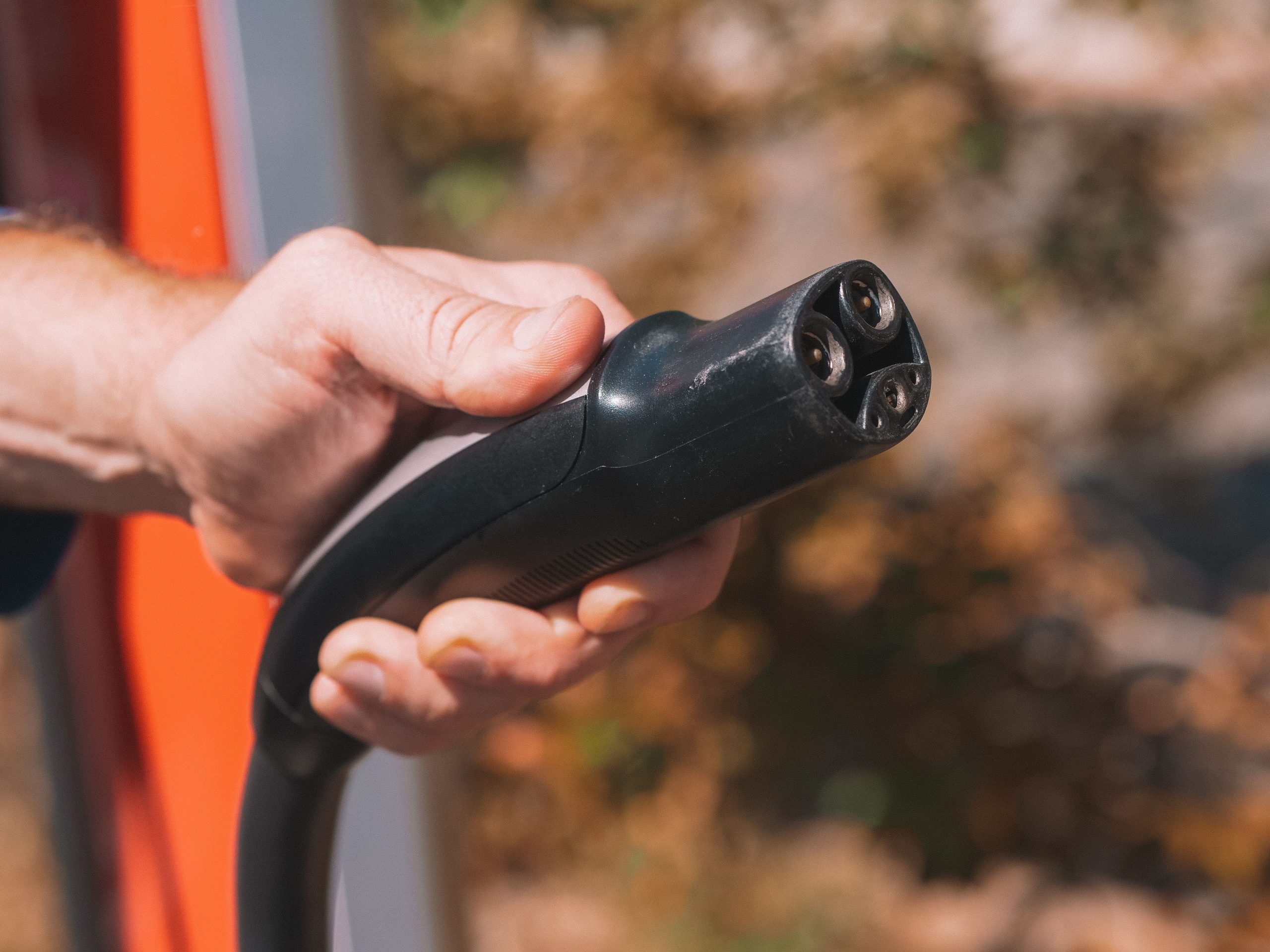
A tethered charger comes with a charging cable permanently attached to the unit. You simply lift the cable and plug straight into your car, there is no separate cable to store, carry, or forget.
An untethered charger has a socket rather than a fixed cable. You plug your own separate charging cable into the unit at one end and your car at the other. This means you need to own and store a cable, but it also means you are not tied to one connector type or cable length.
Both types deliver exactly the same charging speed and safety standard, the difference is entirely about convenience and flexibility, not performance.
Tethered chargers: the case for
- Convenience: no separate cable to find, store, or forget in the boot.
- One less thing to buy: the cable is included with the unit.
- Simplicity: especially useful if you are not confident distinguishing Type 1 from Type 2 connectors.
The trade-off is that you are committed to whatever cable length and connector type came with the unit, typically 5m to 8m and Type 2 for UK installations. If you ever change to a car with a different connector, or need a longer reach, you may need to replace the whole cable assembly rather than just swapping cables.
Untethered chargers: the case for
- Flexibility: use whichever cable suits your current car, and swap it easily if you change vehicles.
- No cable wear on the charger itself: the cable is a separate, replaceable item.
- Neater when not in use: nothing hanging permanently off the wall unit.
The trade-off is that you do need to remember to bring your cable, and store it somewhere sensible, in the car boot, a wall-mounted holster, or similar. For most households this becomes second nature within a week or two.
Which do we install more often?
Honestly, it is fairly evenly split, and it comes down to household habits more than any technical advantage. If you have one car, always park in the same spot, and want the simplest possible day-to-day experience, tethered is usually the easier choice. If you are likely to change vehicles in the next few years, drive more than one EV with different connector needs, or simply prefer not to have a fixed cable dangling from the wall, untethered tends to suit better.
Of the four chargers we install regularly, the availability of tethered and untethered versions varies:
- Zappi: available tethered (5m or 8m) or untethered.
- Easee One: untethered as standard, with a tethered version available.
- Ohme Home Pro: tethered only, no untethered version currently offered.
- Hypervolt Home 3.0: available tethered or untethered.
If Ohme’s tariff optimisation features are the main draw for you but you would prefer untethered, that is worth knowing early, since it is not offered as an option on that particular unit.
Recommendations by scenario
- Single EV, always parked in the same spot: tethered is the more convenient day-to-day choice.
- Multiple EVs with different connector types in the household: untethered, so one cable per driver rather than being locked to a single connector.
- Worried about cable damage or vandalism outside: untethered, since you can simply take the cable indoors with you.
- Want the absolute simplest setup with nothing extra to think about: tethered.
- On Ohme specifically for the tariff integration: tethered comes as standard, this is not an area of choice with that unit.
Cable length considerations
Tethered cables commonly come in 5m, 6.5m, or 8m lengths. It is worth thinking through your actual parking position and where the charger will be mounted before choosing, a cable that is slightly too short is a genuine daily frustration, and lengthening a tethered cable is not a simple job. We measure this out properly as part of every site survey so this does not become an issue after installation.
Frequently Asked Questions
-
Is one type safer than the other?
No. Tethered and untethered chargers meet exactly the same safety standards, the difference is purely about cable ownership and convenience.
-
Can I add a cable later if I choose untethered?
Yes, that is one of the advantages, you can buy a compatible Type 2 cable separately at any point, and replace it if it wears out or you need a different length.
-
Does charging speed differ between the two?
No, charging speed depends on the charger’s power rating and your car’s onboard charger, not on whether the unit is tethered or untethered.
-
Which do most of your customers choose?
It is genuinely close to a 50/50 split across our installations. We will talk through your specific situation at the quote stage and give you an honest recommendation rather than push whichever we happen to have in stock.
Ready to Get Your Free EV Charger Installation Quote?
Call us on 07736 736233 or fill in our EV charger quote form for a free, no-obligation assessment. We cover Watford, St Albans, Hemel Hempstead, Bushey, Rickmansworth, and throughout Hertfordshire. We will advise honestly on the right charger for your home, handle the grant application if you are eligible, and take care of everything from installation through to final certification.